
A conversation that leads to continued care
What We Learned
Listening, sharing experience, and choosing practical next steps.
Our community need
Our discussion considered how to protect children and vulnerable adults online through education, supervision, and respectful communication. The conversation connected family safety with our action statement: pause before posting, verify before sharing, and communicate with compassion.
Insights from our recorded discussion
The findings below summarize participants’ experiences and views recorded in Tracy’s meeting notes. They are qualitative discussion findings, rather than a survey or a measure of how often these experiences occur.
- Pause before posting. Participants discussed thinking about words before sending them and recognizing that online behavior can affect real relationships.
- Verify before sharing. We discussed how passing along unchecked information can spread rumors and harm others.
- Parental controls need continued involvement. The conversation emphasized family discussions, checking understanding, and ongoing supervision.
- Vulnerability extends beyond childhood. We discussed manipulation of adults and the need to consider grief, loneliness, and the desire for connection.
- Education and shepherding belong together. Participants emphasized staying involved, learning our limits, and using digital tools in ways that benefit daily life.
How those insights shaped these pages
The privacy activity responds to the concerns about children’s safety. The suspicious-promise activity addresses adult vulnerability. The verification and kindness activities put our original action statement into practice. The help resources offer a place to begin when someone needs support.
A personal connection
Tracy’s reflection
What stood out to me most during our discussion is that no matter who we are or how old we become, we remain vulnerable in certain circumstances and at certain times.
I experienced this while serving as guardian for an older friend who had lost her husband. She became involved with people online who promised marriage and repeatedly asked for money. She wanted to believe they would rescue her from the emotional pain of grief, the physical difficulties of aging, and the loneliness she was experiencing. Her situation helped me understand that protecting someone requires more than telling them a person online cannot be trusted. We also have to recognize the need that makes the promise so appealing.
The risks look different across generations. Adults may encounter false promises of love or financial security. Children may encounter manipulation, inappropriate contact, or bullying. Online interactions can give people opportunities to help others, but they can also create opportunities to cause harm.
My takeaway is that adults must remain involved in protecting, educating, and shepherding our children and ourselves. Parental controls are part of that effort, but conversations, supervision, and checking for understanding must continue.
This connects directly to Grace Harbor. We help people grieve and recover through education and shepherding. Encouraging people to pause before posting, verify information before sharing, and communicate with respect and compassion extends that same care into their online lives.
Resources to share
Learn together.
Digital Literacy
Tracy Lee’s original course presentation introduces digital literacy, digital citizenship, and responsible use of online content.
Download Digital Literacy PowerPointSafe and Kind Online
A family discussion presentation about private information, online contacts, kindness, and asking for help.
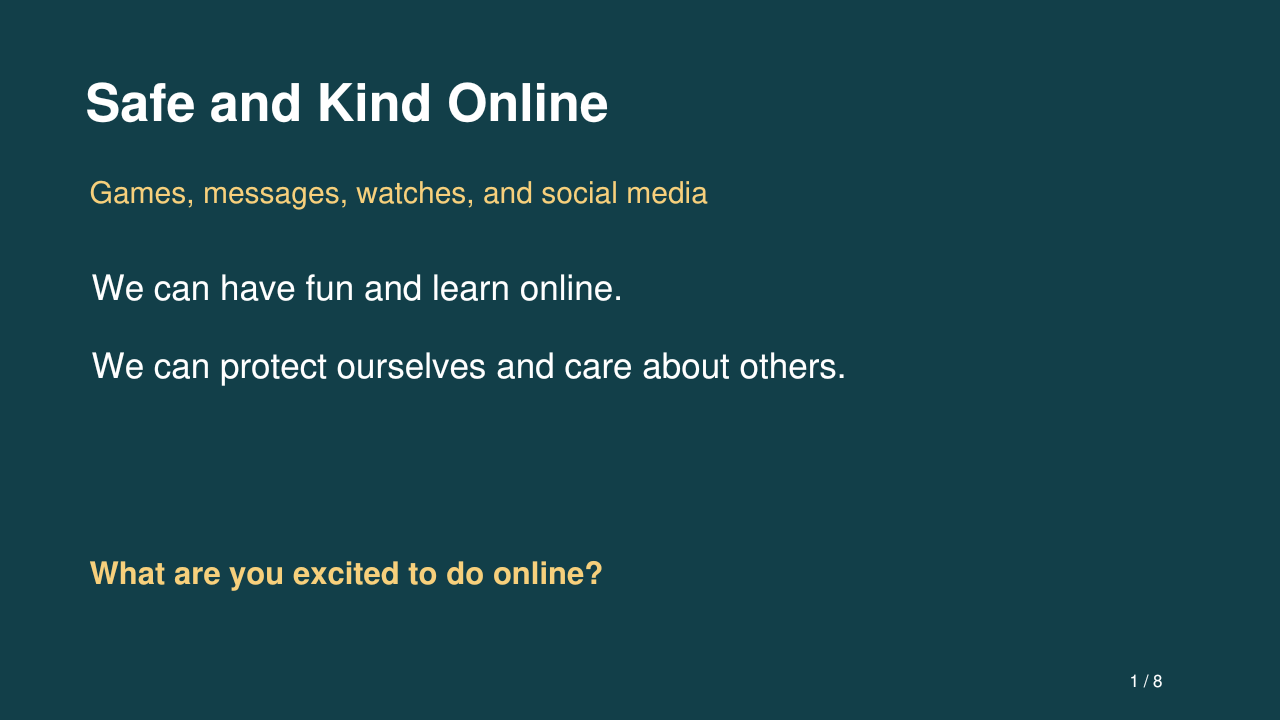
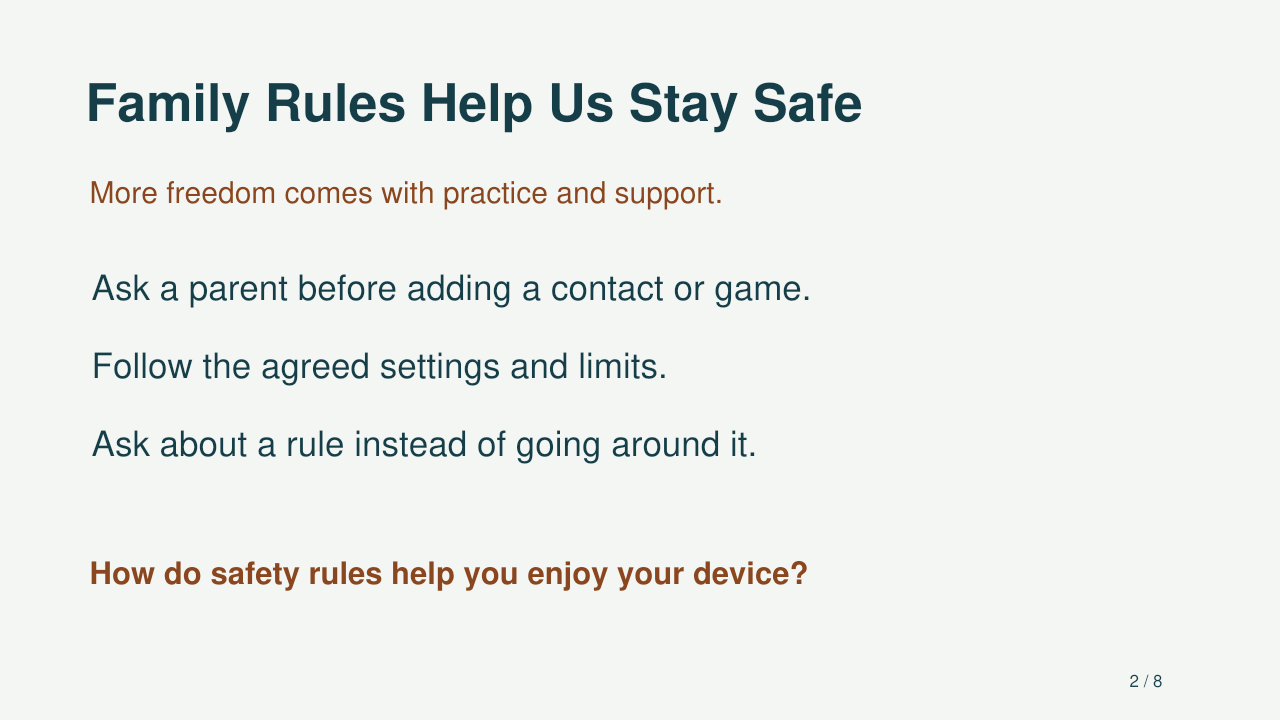
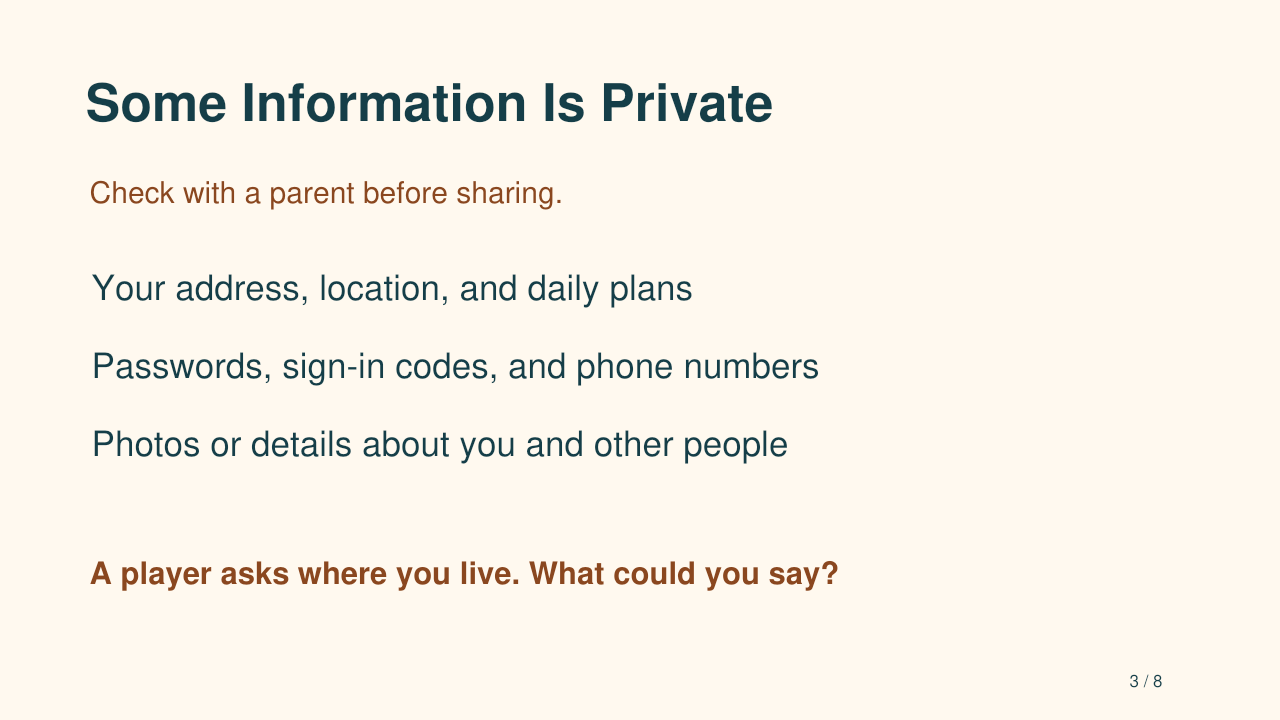
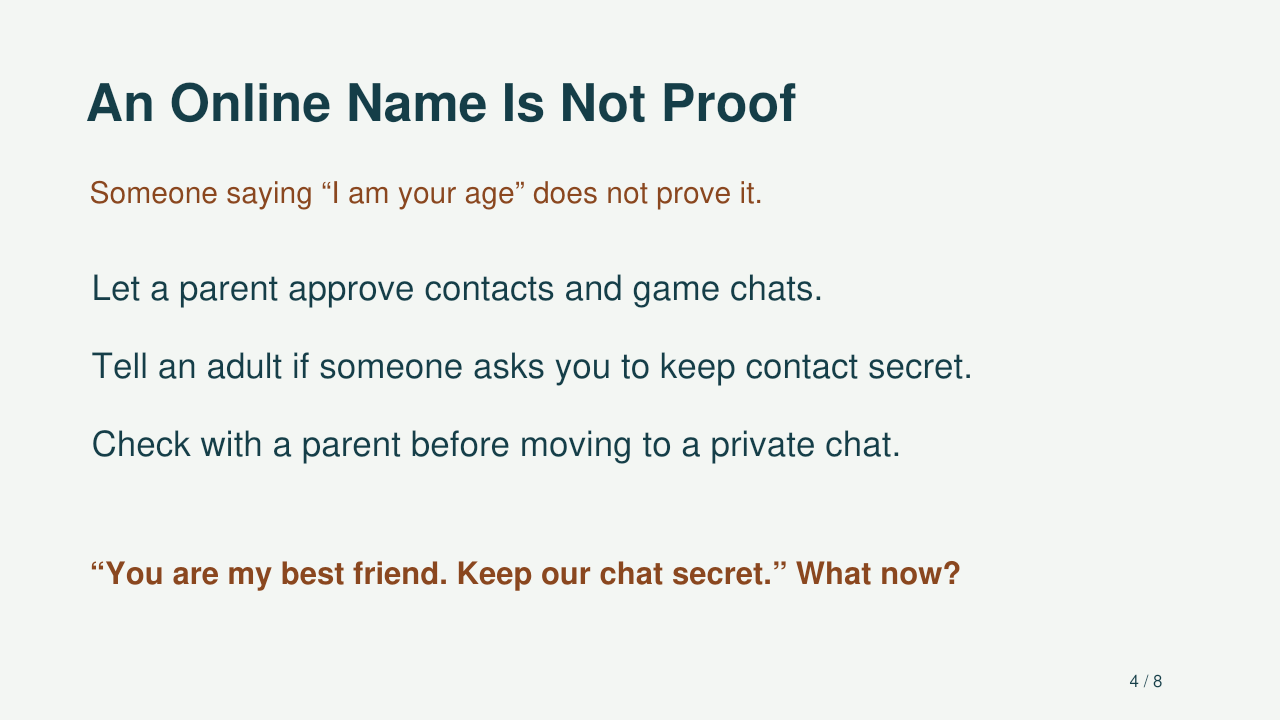
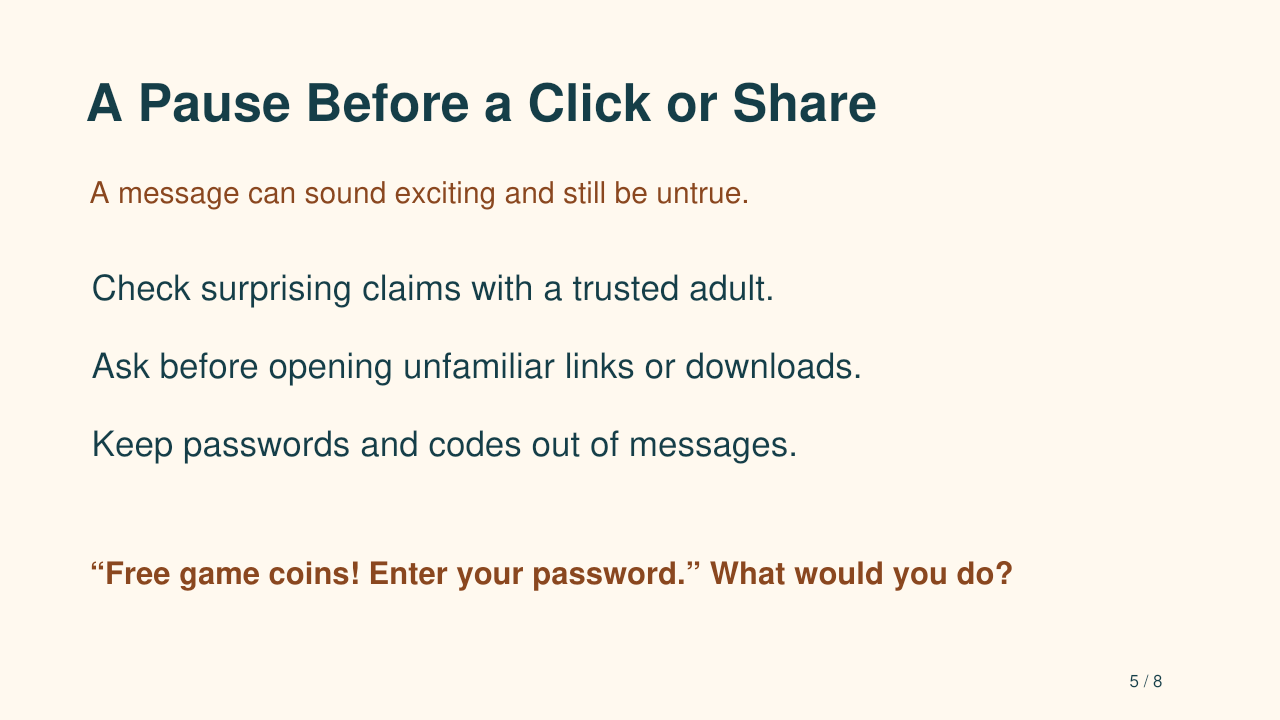
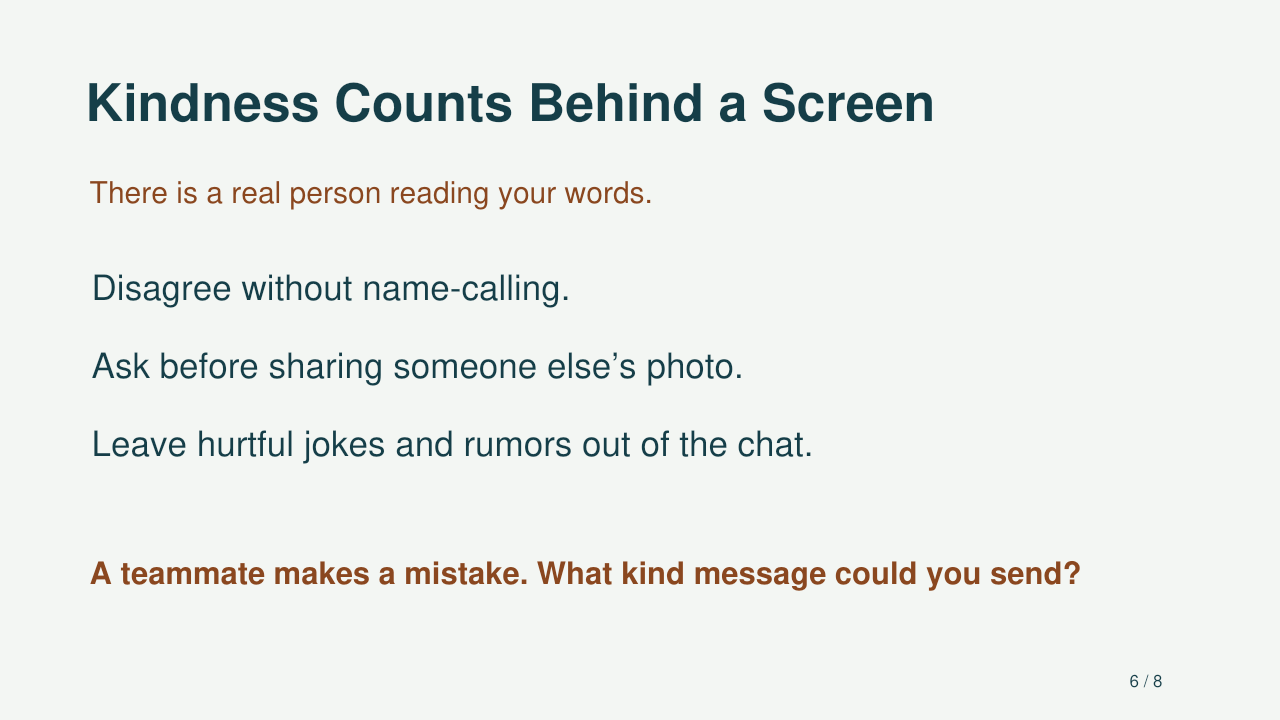
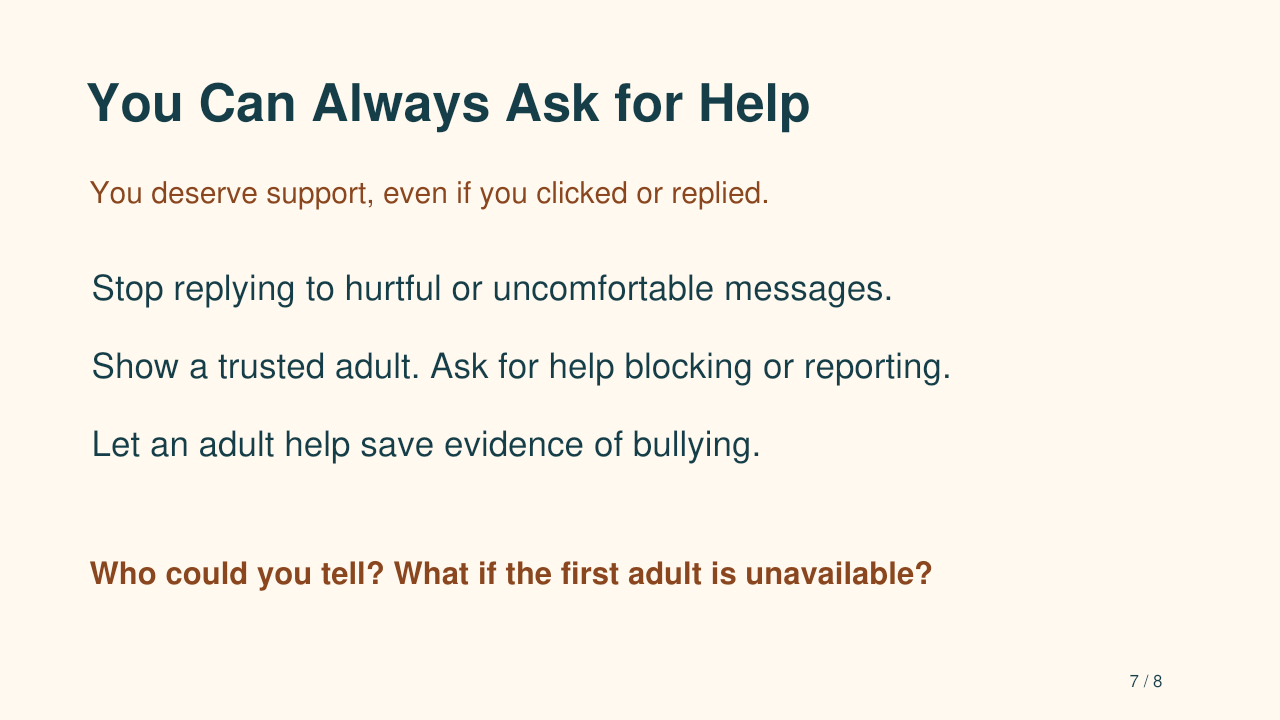
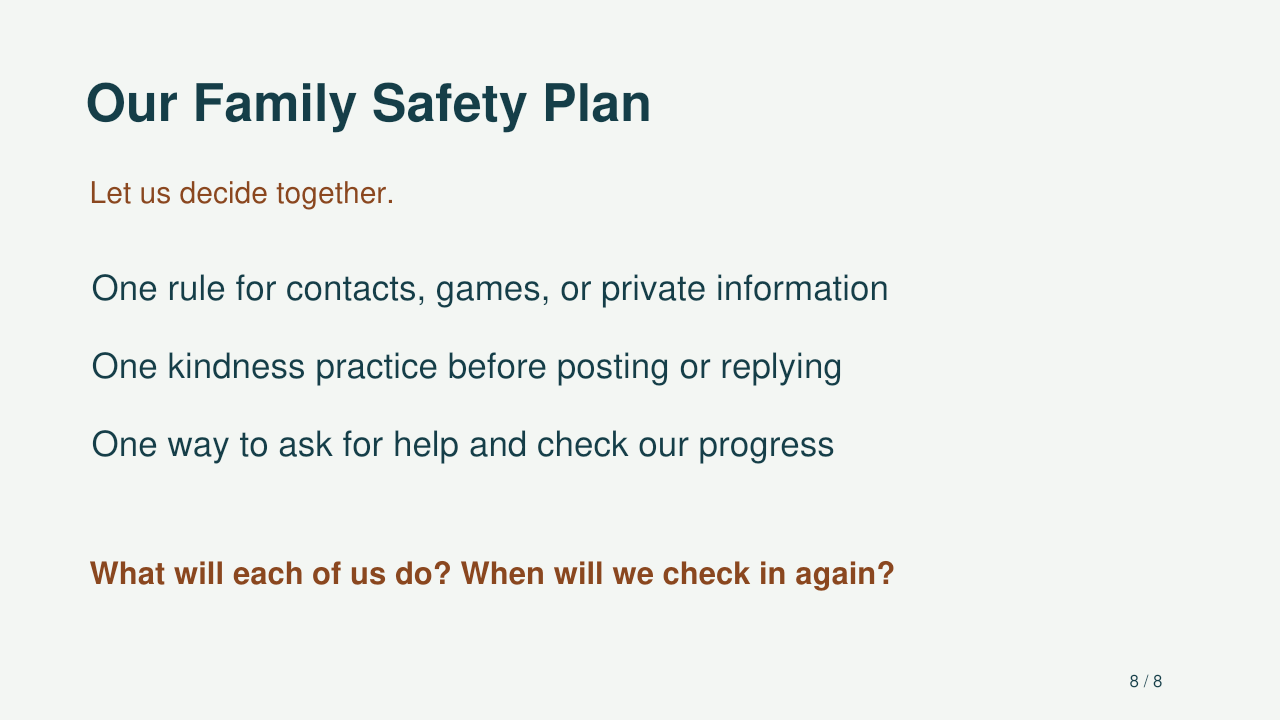
Slide 1 of 8
A proposed plan for continued improvement
To carry the discussion forward, I propose that we:
- Use the family presentation and practice situations to begin conversations with children and caregivers.
- Ask each person to explain a safe response in their own words, so we can identify what needs more explanation.
- Choose one practical safety or kindness habit and revisit it together after one week.
- Review guidance and links as devices, platforms, and family needs change.
We can look for progress through people’s ability to explain their choices, identify a trusted person for help, and describe how they practiced their chosen habit. These are proposed follow-up steps; we have not yet collected follow-up results.
Trusted resources
- Federal Trade Commission: Parental controls and family conversations
- Federal Trade Commission: Recognizing romance scams
- StopBullying.gov: Preventing and responding to cyberbullying
- 988 Lifeline: Emotional and crisis support
Resource links checked October 2, 2026. The personal reflection and discussion summary are based on Tracy Lee’s experiences and meeting notes.
Grace Online · Grace Harbor Home · Contact Grace Harbor
Free educational resources for families, caregivers, and our community.